
Another Persephone Period is behind us.
Okay, this is the last email for a while about day length (did you know we’ve gained 83 minutes of daylight since the solstice?!).
For winter growing, there’s an important metric to keep in mind: 10 hours. When we drop below 10 hours of daylight, plants don’t really grow. Under the right conditions, they don’t die — they just wait.
We call this window the Persephone Period. In Lander, it runs from early November to early February.
And why is it called the Persephone Period? It’s rooted in Greek mythology. Persephone was the daughter of Demeter, the goddess of the harvest, and Zeus, king of the gods. Persephone was associated with spring, flowers, and new growth.
One day, while Persephone was picking flowers in a meadow, Hades, god of the underworld, took her to be his wife. Demeter was devastated. In her grief and rage, she neglected the earth. Crops failed. Nothing grew. Famine spread across the world.
Eventually, Zeus ordered Hades to return Persephone. But because Persephone had eaten pomegranate seeds in the underworld (a big no-no), a compromise was struck: she would spend part of the year below ground and part above. When she returns, Demeter rejoices and the earth grows green and fertile; when she descends, her mother mourns and winter settles in.
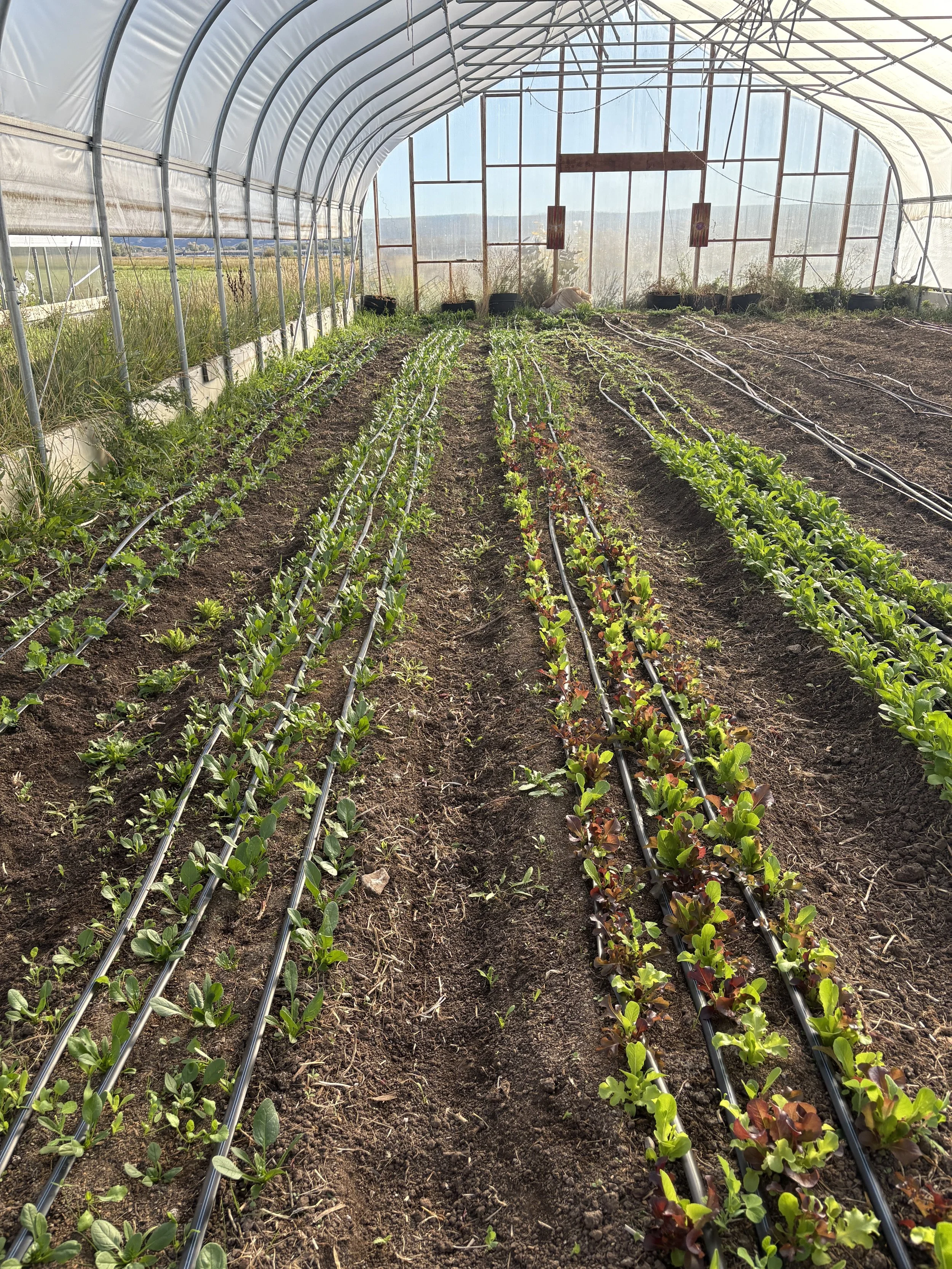
Kale, spinach, lettuce and arugula in October, ready for a little growth and winter rest.
Exciting news — our Persephone Period ended on February 1 this year. We’re on the other side of it—10 hours and 24 minutes for those keeping track!!
So what does this mean for winter growing? Anything we want to survive the winter, gets planted in the late summer. It must mature to a harvestable size by the beginning of the Persephone Period — then we harvest it until it’s gone (or the aphids take it over).
For example, I planted a bed of kale in one of our tunnels in September. I harvested off of it in the early winter until each plant had only a few leaves left. Since then, it’s just sat there. Last week I gave it a good water and (if the aphids hold off) it will start growing again in earnest for late winter and early spring harvests.
The end of the Persephone Period also means I’m planting seeds this week! Here’s what we’ll sow in the tunnels and propagation house: arugula, spinach, radishes, turnips, parsley, carrots, lettuce, tokyo bekana, bok choy, broccolini and more.
And maybe this is in my head, but I feel the Persephone Period in my bones too. In November, I’m beat. I’m done. I can’t imagine tending to another plant. So, I do the bare minimum. And today? I’m so freaking excited to play in the dirt again. Time to wake up!