Worth the wait: ranunculus season
Ranunculus are one of those flowers that make people stop in their tracks—lush, layered, and super colorful. They look a bit like a rose but with a wilder feel. And ranunuculs grown in Lander? They’re extra special because they ask for patience—planted in the cold, grown slowly in the perfect conditions, and offered just as spring finds its footing. Like so much of what we grow, ranunculus should be enjoyed deeply and intensely during their own fleeting season, just like a cherry tomato or fresh basil.
We grow them.
Ranunculus are native to the eastern Mediterranean and parts of western Asia and thrive in moderate temperatures. To help mimic these growing conditions in Wyoming, we plant them in our high tunnels at the end of January.
Ranunculus are grown from corms—the dormant roots of last year’s plants that we dug up, dried, stored for a few months. When it’s time to plant them, we rehydrate the corms (they look like a small octopus) by soaking them for a few hours. Some folks then put them in peat moss for a couple weeks to let them sprout. We’ve done this in the past but it is messy and kind of a pain. This year, we’re trying something new—just soaking and putting them straight in the soil. Stay tuned to see how it works.
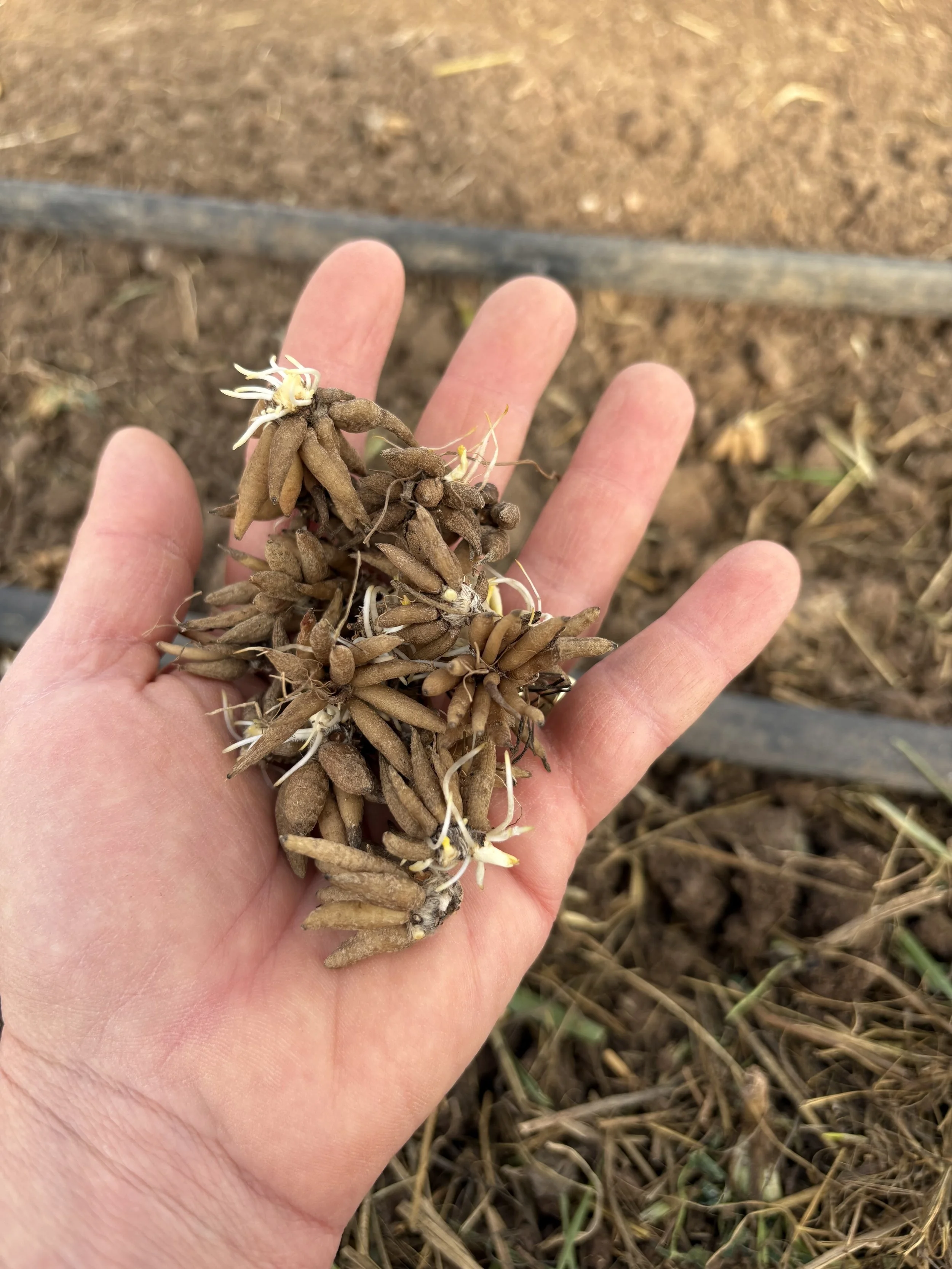
Under the right conditions, the corms send up little green shoots a few weeks later and grow foliage for a couple months. Ranunculus are picky and our high tunnels help mimic their preferred conditions. They want consistent moisture, cool soil, and as close to 60 degrees as possible. We cover them with a frost cloth at night to protect them from freezing temperatures and vent the tunnels during the day to keep them cool. It is a labor of love.
We cut them.
In early May, I start peeking through the leaves for the first sign of a bud here and there. By the first week of June, we are cutting buckets and buckets and buckets every week.
And cutting ranunculus at the right time really matters. Ranunculus flowers are heliotropic, meaning they respond directly to light and temperature. In cool mornings or low light, the blooms stay closed and cup-shaped. As the day warms and light increases, they slowly open outward, layer by layer. Then, as the sun sets and the temperature cools, the petals fold back in on themselves.
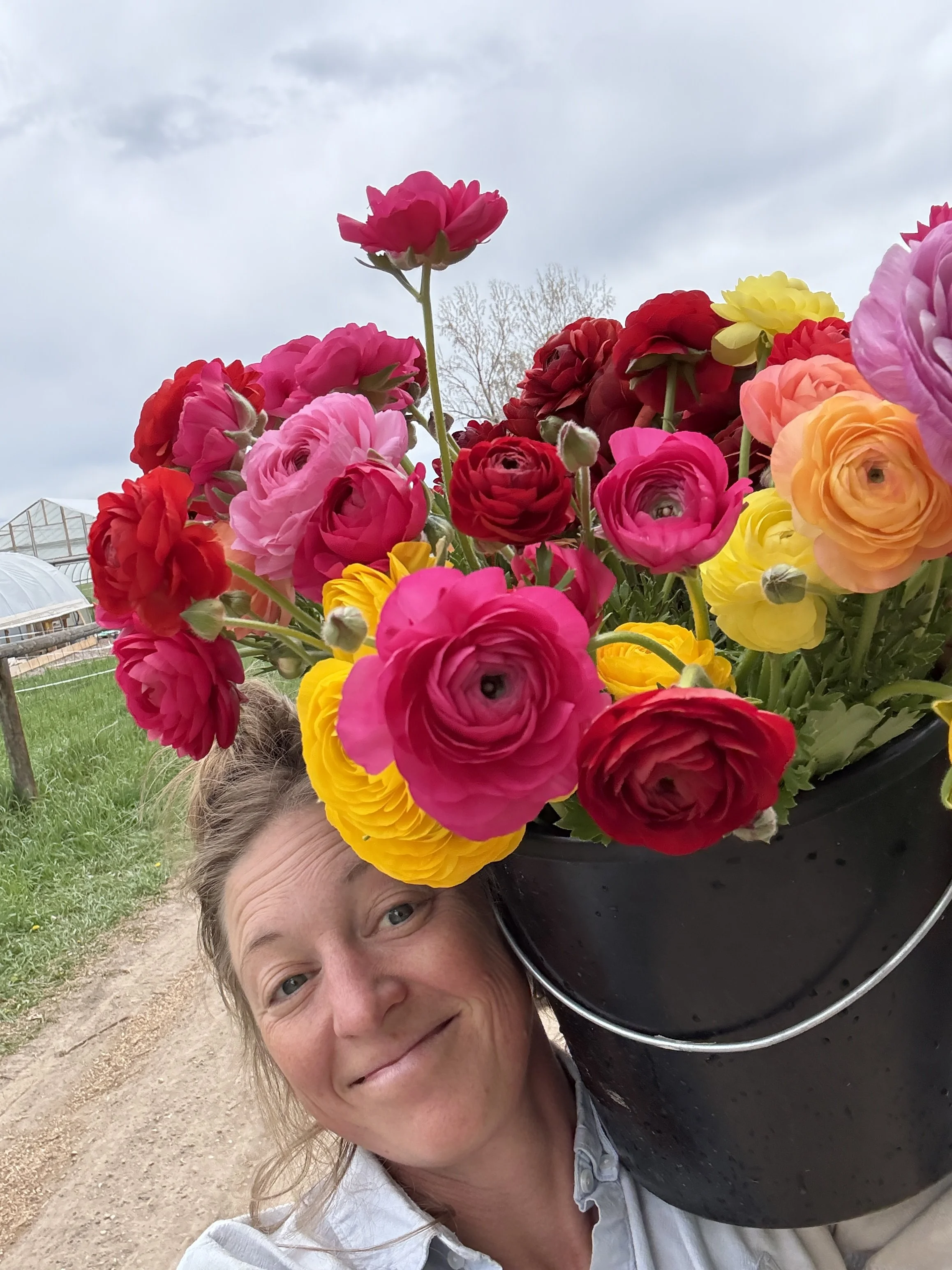
The perfect time to cut a stem is the early morning, when the flower is just starting to open up. During ranunculus season, I’m filling buckets with water and grabbing clippers by 6 am. As I cut over the next couple hours, I watch as the flowers slowly open to greet the sun.
We bring them to you.
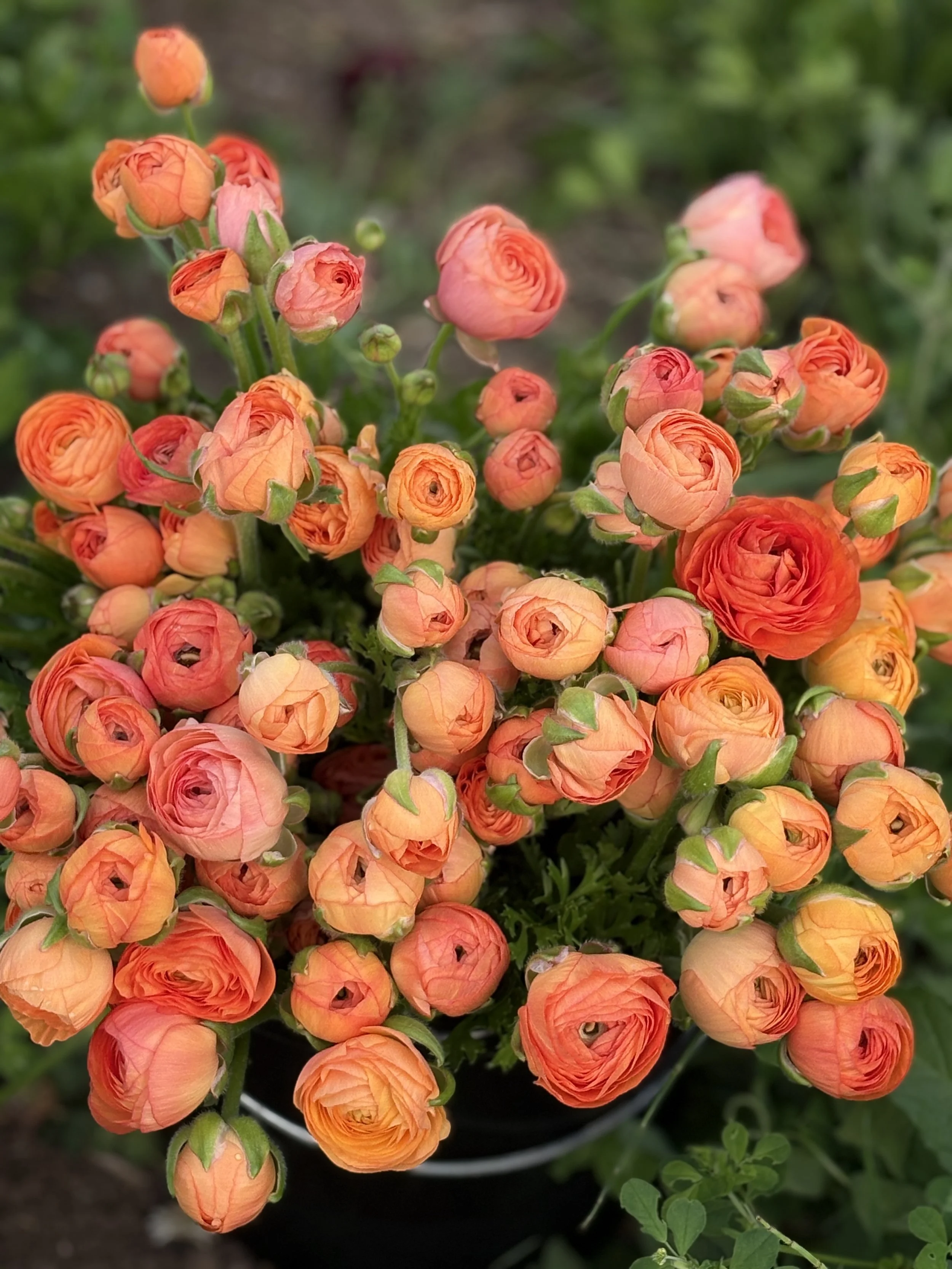
Ranunculus harvest at the perfect stage results in a flower with a ridiculously long vase life—nearly three weeks. As in the high tunnel, the flowers close at night and open during the day in a vase on a kitchen table. The many petals continue to unfurl, layer by layer, day by day. Their color changes too, maturing from vibrant hues to more antique-y, subtle tones. They put on quite a show.
I swoon over ranunculus. I’m not great about bringing flowers into our house during the growing season—I enjoy them in the fields and love cutting and arranging them. That is often enough with the cosmos and the lisianthus and dahlias. But I pile on the ranunculus. Any bloom that’s a little too open or a tad bruised goes on our kitchen counter, dining room table, bathroom vanity, gets hung to dry or tucked in a ponytail. I can’t get enough of them.
And I see the same swoony look on the faces of customers come spring as we unload ranunculus from our truck at market. After a long winter, the luscious and colorful blooms are a sight for sore eyes. And I feel so good about sharing them because, unlike grocery store flowers, ranunculus will last on your counter for weeks, keeping you company through any late season frosts.
And then they’re done.
Ranunculus season is intense and dramatic and fleeting. We cut thousands of stems in about three weeks. And then, by the Fourth of July, the plants are completely dormant, put to sleep by the heat of summer.
Later in the summer (or more often fall, when the chaos subsides), we harvest the corms. We pull up the plants and cut away any foliage from the roots. The corms are fully dried and they’re stored in brown paper bags somewhere dark and cool until January of the next year, when we start all over.
Lucky for all of us, the end of ranunculus season is marked by the beginning of peony season (with a little overlap if we’re really lucky).